What this means for you
- Who is affected
- Residents considering donating blood, including people new to Spain.
- What this report covers
- The July 2026 donation appeal and the eligibility questions a donation team needs to assess.
- What to do next
- Use Comunidad de Madrid's blood-donation page and current mobile-unit schedule before travelling. Bring identification and let the donation team assess your eligibility.
On this page
Key takeaways
- Comunidad de Madrid's blood-donation page was updated on July 8 and showed reserve levels updated to July 6, with urgent needs marked by blood group.
- Cadena SER reported that regional reserves had fallen to 35%, enough for about a day and a half, and that the alert affected all groups.
- Madrid says the region needs the usual daily donations even when reserves are green; its public page states 900 daily donations across all groups.
- Basic donor criteria are age, weight, and health: generally 18-65 for first-time donors up to 60, over 50 kg, and in good health, with possible donation up to 70 for recent donors with medical authorisation.
- The published basic criteria do not list nationality as an exclusion, but foreign residents should bring photo ID and, if they have them, NIE or TIE details; the donation team decides eligibility after the questionnaire and brief medical check.
What Happened
Madrid's blood reserves are in a bad summer position.
If you are trying to donate blood in Madrid as a foreign resident, the useful answer is not hidden behind a special expat rule. The same donor screening applies, but you need to bring identification and be able to answer the health questions clearly.
The Comunidad de Madrid blood-donation page was updated on July 8, 2026 and shows reserve information updated to July 6. Its reserve chart marks which blood groups are in green, yellow, or red: green means normal daily donations are still needed, yellow means extra donations are needed in two or three days, and red means urgent extra donations are needed.
Cadena SER Madrid reported on July 7 that reserves had fallen to 35%, enough for roughly a day and a half, and that the regional blood system had activated a red alert for all groups. The regional page also reminds readers that Madrid needs 900 donations a day across all blood groups even before extra-alert needs are counted.
The short version: this is not a symbolic appeal. Blood is used every day for surgery, emergencies, childbirth complications, cancer treatment, transplants, and other hospital care. It cannot be manufactured, and summer is exactly when many regular donors disappear to beaches, family towns, and work breaks.
Can Foreign Residents Donate Blood In Madrid?
Usually, yes, if you meet the same medical criteria and can identify yourself.
The Comunidad de Madrid's published basic requirements do not list nationality as an exclusion. They focus on age, weight, health, and the medical screening at the donation point. That means an EU resident, non-EU resident, student, worker, long-term foreign resident, or newcomer may be able to donate if the donation team accepts them after the questionnaire and checks.
Bring a photo ID. If you have a NIE or TIE, bring it. NIE means Numero de Identidad de Extranjero, the foreigner's identification number. TIE means Tarjeta de Identidad de Extranjero, the physical residence card issued to many non-EU residents. If you do not have a TIE yet, bring your passport and any Spanish identification details you have.
The most honest answer for newcomers is this: nationality is not the normal barrier, but identification, medical history, travel history, language comprehension, medication, recent illness, tattoos, piercings, pregnancy, low haemoglobin, or other screening answers can be. The staff at the donation point make the decision on the day.
If your Spanish is limited, go with enough language support to answer health questions accurately. The questionnaire is there to protect you and the patient who may receive your blood. Guessing is not helpful.
The Basic Requirements
The Comunidad de Madrid lists the basic donor requirements as age, weight, and health. You generally need to be between 18 and 65, though the details shift with experience: first-time donors can go up to 60, and returning donors who have given in the last three years, are in good health, and have medical authorisation can donate up to 70. You also need to weigh more than 50 kg and be in generally good health.
You should not go in fasting. The regional page specifically says not to donate on an empty stomach and recommends having eaten at least a small amount. Do not drink alcohol before donating.
Donation frequency also matters. The regional FAQ says whole-blood donation can be done every 8 weeks, with annual limits of 4 donations for women and 6 for men.
If those numbers surprise you, do not self-filter too aggressively. If you are close to the limits, have a medication question, had a recent vaccine, travelled recently, had a tattoo, or are unsure after an illness, ask the donation team. A temporary no is common and may simply mean "not today."
What Happens When You Donate
Expect a simple but serious medical process.
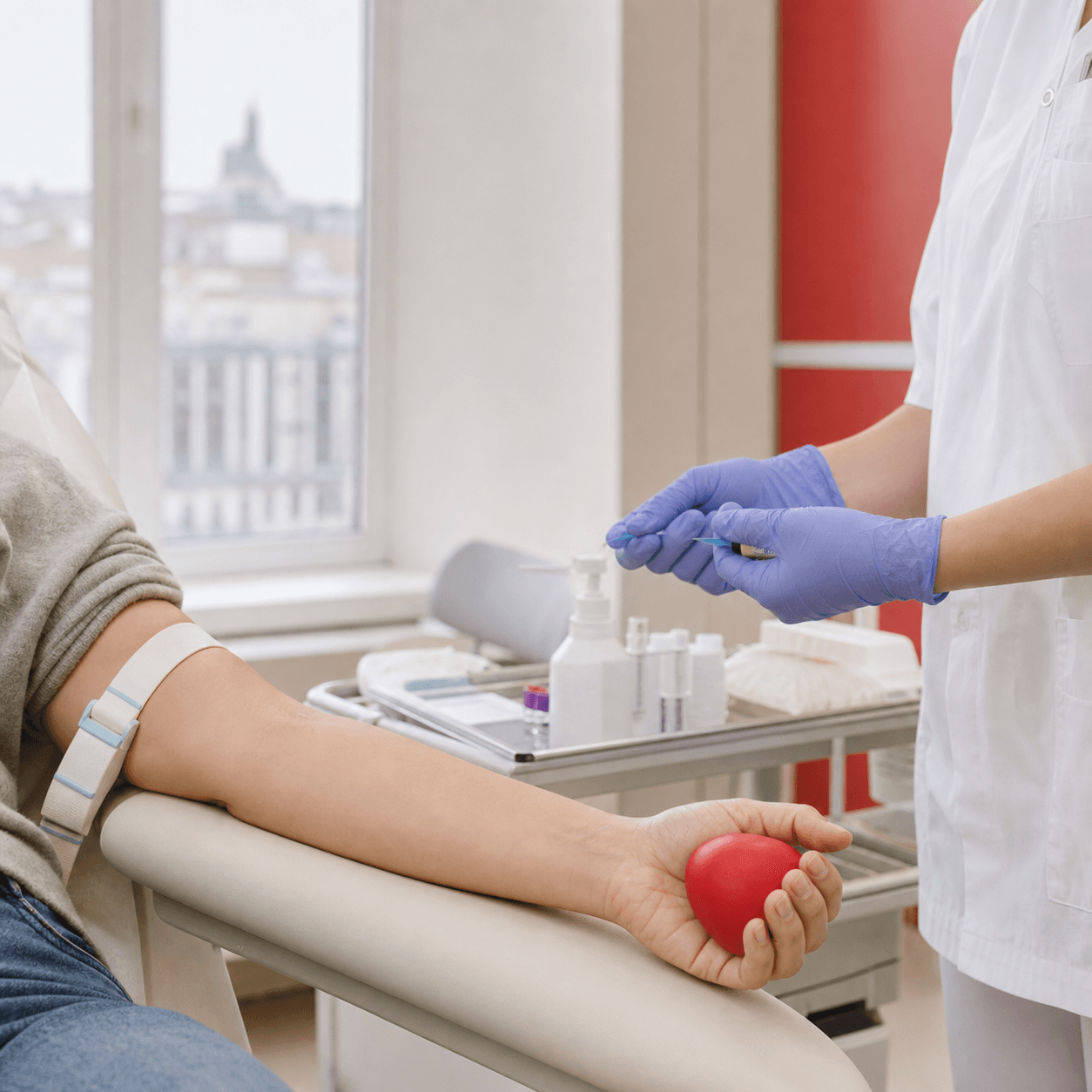
Before donating, you complete a questionnaire with personal details and health questions. Staff ask about your medical history, current health, and lifestyle. The Comunidad de Madrid says this is to protect both the donor and the recipient, and that personal information is confidential.
Then comes a brief medical check: pulse, blood pressure, haemoglobin level, and weight. If the donation team is not confident it is safe for you to donate that day, they will not take blood.
The actual blood draw is quick. The regional page says the bag fills in about 10 minutes, and the whole process takes around 20 minutes on average. Afterwards, you rest for 10 to 15 minutes and take a drink or small snack.
For the rest of the day, keep it boring in the best way. The regional guidance says to rest, take a drink or snack, avoid intense effort for the rest of the day, avoid alcohol, smoking, high heat, heavy-vehicle driving, and intense exercise for the following two hours, and drink plenty of liquid during the next 24 hours. Do not plan your donation immediately before a hard gym session, a long cycle, or heavy summer heat.
Where To Donate In Madrid
The easiest fixed point to understand is the Centro de Transfusion de la Comunidad de Madrid in Valdebernardo. The regional page lists its public opening hours as Monday to Saturday, except holidays, 08:30-21:30, and Sundays and holidays, 08:30-14:00. Transport listed includes Metro Valdebernardo on Line 9 and buses 71, 130, 8, and E4.
For central Madrid, the region lists a mobile unit at Gran Via esquina Calle Montera, open Monday to Friday 11:00-20:45 and Saturday and Sunday 10:00-20:45. Because this is one of the simplest central options, expect it to be useful but not necessarily quiet.
The regional page also lists the Cruz Roja extraction unit at Calle Juan Montalvo 3, open Monday to Friday 09:00-20:30, except holidays.
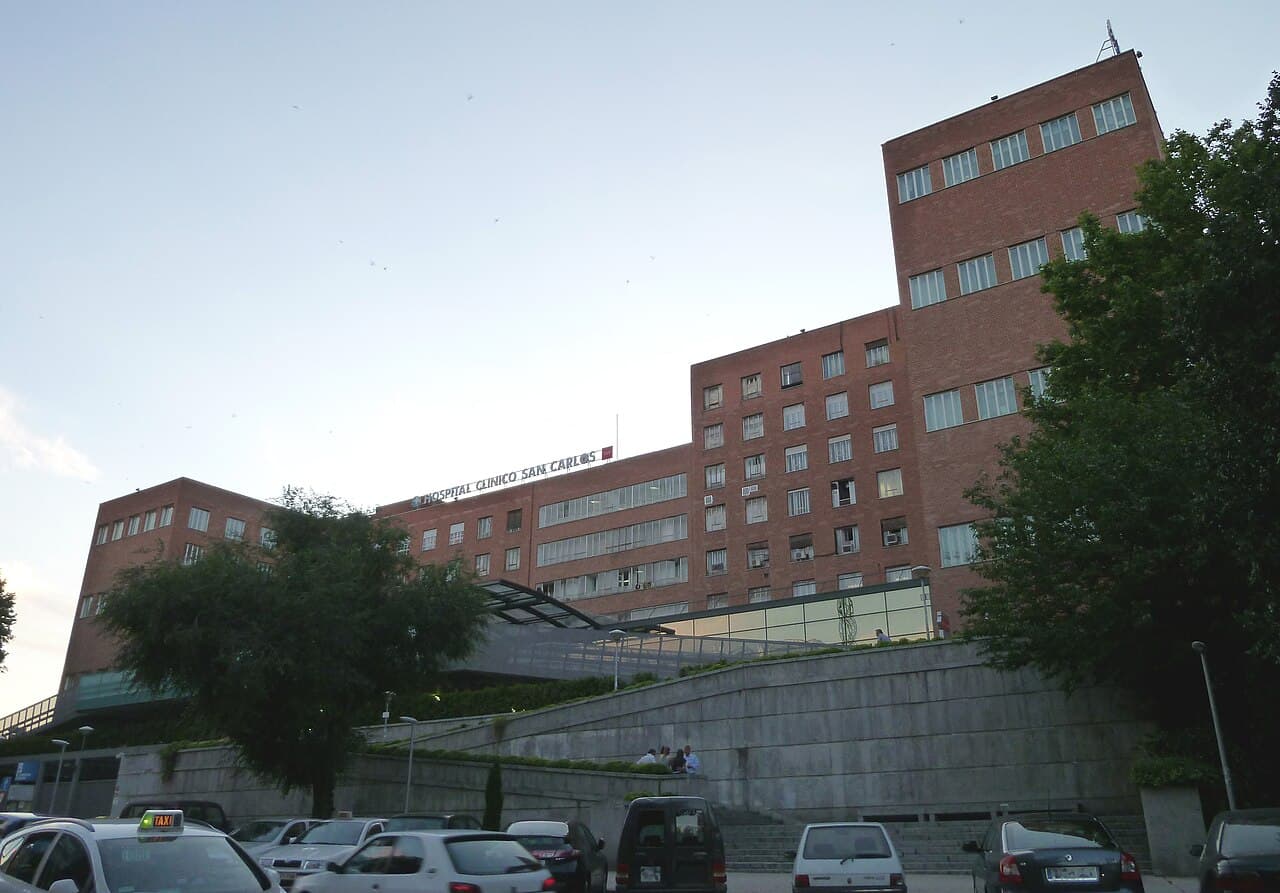
Several Madrid hospitals also have donation rooms, including Hospital Clinico San Carlos, Hospital 12 de Octubre, Fundacion Jimenez Diaz, Gregorio Maranon, La Paz, La Princesa, Nino Jesus, Ramon y Cajal, and Santa Cristina, among others. The catch is summer scheduling. The official page warns that holiday-period hours can change and advises checking the specific hospital before going.
If you live outside the city centre, check the fixed points and mobile units by municipality. The official mobile-point search is the best tool for this because the useful answer may be a bus parked near your town hall for one afternoon, not a hospital across the region.
Do You Need An Appointment?
For many blood-donation points, Madrid's system is designed around walk-in donation, but do not assume every room is open all day or operating its normal timetable in July and August.
The practical sequence is straightforward: check the Comunidad de Madrid donation page or the mobile-points page, pick a fixed point or mobile unit with today's date and current hours, bring photo ID plus your NIE or TIE if you have one, eat lightly beforehand and drink water, and leave time for the questionnaire, screening, donation, and rest.
If you are going to a hospital room, click through to that hospital's own donation listing first. Some rooms reduce hours in summer, some close on holidays, and some publish temporary notices. If the listing still leaves a doubt, the regional page gives a free donor-information number: 900 30 35 30.
What To Bring
Bring your passport, DNI, TIE, or another official photo ID, plus your NIE details if they are not already on that document. If you have donated before, bring your donor card. If you are on medication, bring a list of what you take. And bring enough Spanish, or someone who has it, to answer the health questionnaire accurately, plus water for before and after, especially in July.
Do not bring a heroic attitude. Donation is useful precisely because the screening is careful. If staff tell you not to donate that day, ask when you may be able to return.
The Expat Gap
The reason this question matters for foreign residents is that Spain's bureaucracy trains people to ask: "Am I allowed?"
For blood donation, the better question is: "Can I be safely accepted today?" The answer depends less on your passport and more on your health, identification, questionnaire, haemoglobin, blood pressure, recent travel, and medical history.
If you have just arrived in Madrid and do not yet have every document, the safest plan is to bring your passport, any NIE paperwork you have, and ask at a major fixed point. If you already have a TIE, bring it. If you are an EU citizen with a passport or national ID and a NIE certificate, bring both.
The staff may care about practical identification and traceability more than the category you use to describe yourself. Do not argue from vibes; bring documents.
The Bottom Line
Madrid needs blood now, and July is a dangerous month for reserves because normal donors vanish just as hospitals continue needing blood every day.
If you are a foreign resident and you meet the basic health criteria, do not assume you are excluded. Check an official donation point, bring ID and any NIE or TIE details, eat lightly, answer the health questions honestly, and let the medical team decide.
It is one of the few civic actions in Madrid that can take less than an hour and matter almost immediately. That is worth a little paperwork energy.
Main tradeoffs
- The need is urgent, but donation is still a medical screening process; being willing to donate is not the same as being accepted that day.
- Hospital donation rooms are useful, but summer schedules change, so the nearest point is not always the best point.
- Mobile units can be convenient, but fixed points such as the Centro de Transfusion, Gran Via-Montera unit, Cruz Roja, and major hospitals are easier for many newcomers to understand.
Sources
- Donacion de sangre / Comunidad de Madrid
- Llamamiento urgente para donar sangre en la Comunidad de Madrid / Cadena SER Madrid
- Puntos moviles por fecha y municipio / Centro de Transfusion de la Comunidad de Madrid
Spotted an outdated detail? Send the desk a correction.