On this page
Key takeaways
- Feria del Libro de Madrid 2026 runs from Friday May 29 to Sunday June 14 on the Paseo de Coches in El Retiro. Entry is free; books are sold with a required 10% discount.
- The official site lists 245 exhibitors and 231 authors signing; the fair's March allocation notice says 366 casetas were assigned for this edition.
- Go on weekday mornings or right after the 17:00 reopening if you want to browse. With opening-weekend highs forecast around 34-35°C, the early and late windows are practical, not just pleasant.
- English-language readers should start with Booksellers at caseta 53 and Desperate Literature at caseta 77, then use the official exhibitor search before going.
The Quick Version
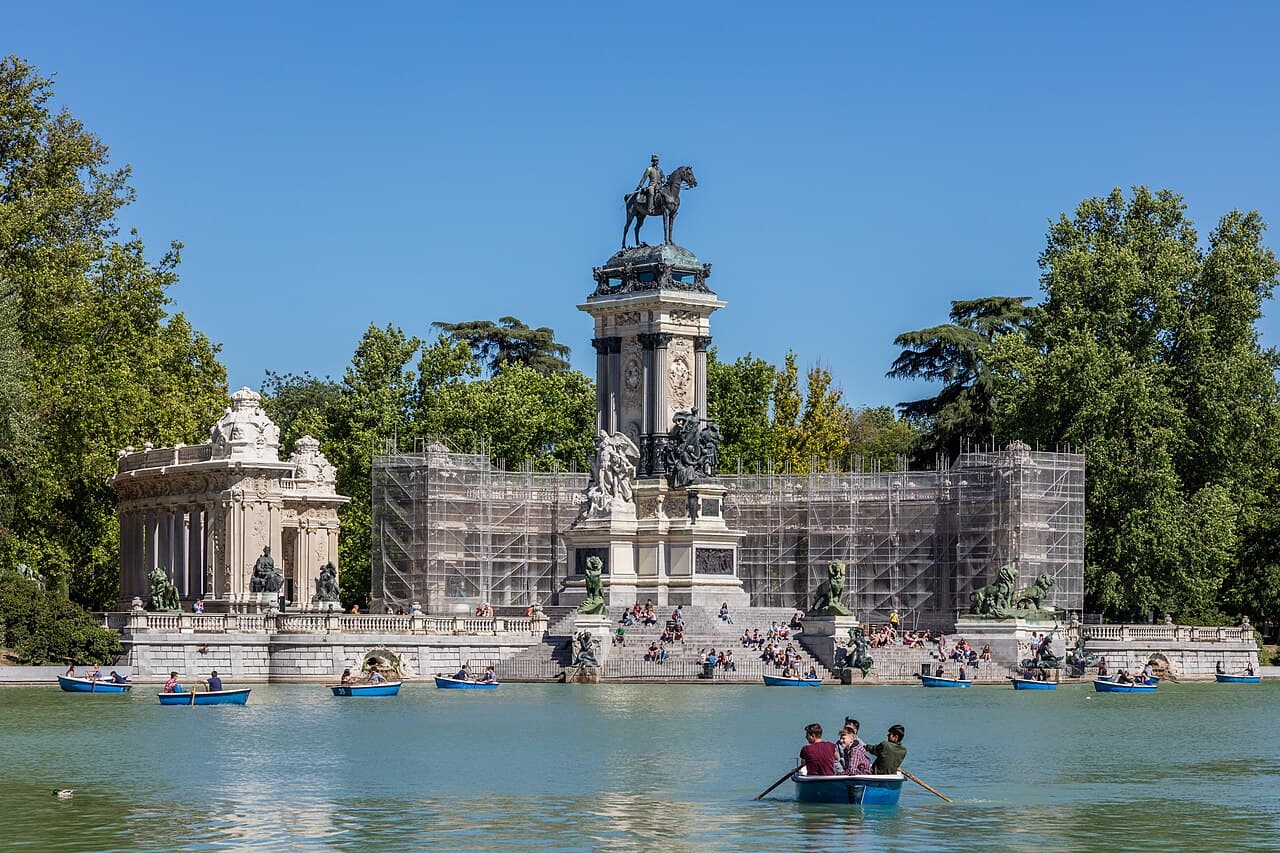
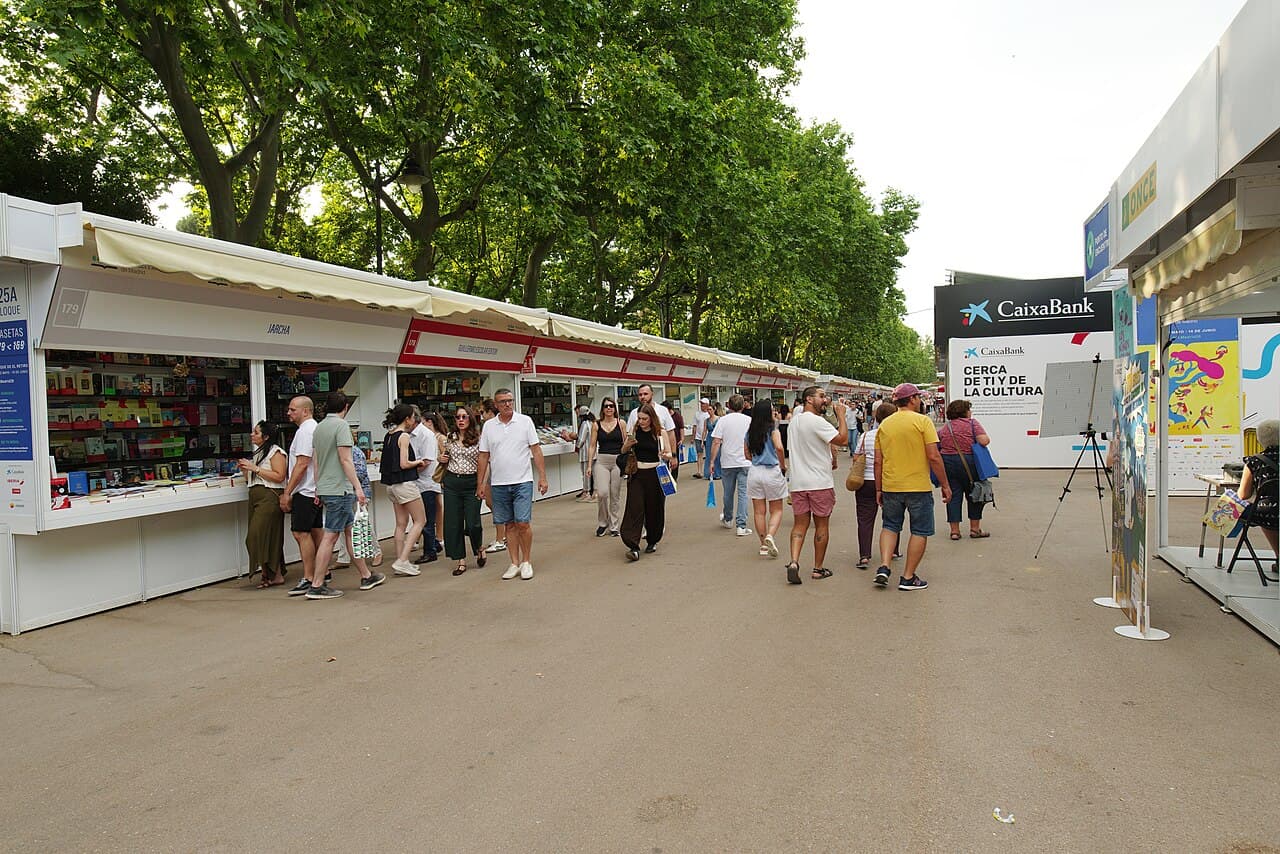
Madrid's Feria del Libro opens on Friday May 29, 2026, not Thursday, and runs until Sunday June 14. For 17 days, the Paseo de Coches in El Retiro becomes a long outdoor book corridor: publishers, bookshops, institutions, children's activities, author signings, and enough tote bags to make the park briefly feel like a very literate airport queue.
One immediate planning note: the opening stretch looks hot. As of May 24, AEMET's Madrid forecast is already in the low-to-mid 30s with very high UV, and 14-day forecasts show the opening weekend around 34-35°C. This is not background weather. It changes when you should go.
Entry is free. The books are not free. They are sold with a required 10% discount inside the fair, which is the kind of small but real saving that turns "I'll just browse" into "apparently I own three hardbacks now."
The 2026 edition is the 85th, and its theme is Leer y reír: dos formas de resistir: reading and laughing as two ways to resist. The Comunidad de Madrid says the edition is dedicated to humour, satire, irony, and laughter as tools for critical reading and reflection. That sounds grand. In practice, it means a fair with a comic spine, a lot of signings, and a decent excuse to spend a spring afternoon in Retiro without pretending you went there for exercise.
Official figures to keep straight: the fair's exhibitor page lists 245 exhibitors; the signing page says 231 authors are scheduled to sign; and the fair's March caseta allocation notice says 366 casetas were assigned for this edition. The map numbering runs higher because not every numbered space is a standard public-facing book stall. This is Madrid, so even counting the booths requires a footnote.
When To Go
The fair's published hours are:
- Monday to Friday: 10:30-14:00 and 17:00-21:00
- Saturday and Sunday: 10:30-15:00 and 17:00-21:00
That long lunch closure matters. Do not arrive at 15:30 with literary optimism and no plan; the casetas will be closed and Retiro will offer you exactly what it always offers at that hour: heat, dust, and benches already occupied by people making better decisions.
The best browsing windows are weekday mornings, especially 10:30-12:30, and weekday evenings just after the 17:00 reopening. This year, that is partly crowd advice and partly heat advice. The opening Friday evening will have novelty energy; the first weekend, May 30-31, will be busy because everyone who has ever said "we should do something cultural" will have the same thought at the same time.
If you are going with children, go early on a weekend morning and leave before lunch. If you are going for one specific author signing, build the visit around that and accept that browsing may become secondary. If you are going on a date, choose a weekday evening and leave time for a drink around Ibiza, Retiro, or Menendez Pelayo afterwards. Nothing tests compatibility like watching someone queue for a signed essay collection.
How Author Signings Actually Work
The official signing programme lives at ferialibromadrid.com/firmas. It is organised by day, and you should check it before you leave home because the fair warns that signings can be modified or cancelled for weather or other reasons.
The normal signing logic is simple: find the author, note the day, time, exhibitor, block, and caseta, then arrive earlier than feels reasonable. For a low-key signing, 20-30 minutes may be fine. For a famous novelist, media figure, children's author, or BookTok-level phenomenon, treat the queue as the event. Bring water, shade, and a realistic view of human nature.
The 2026 regulations also make two practical points worth knowing. First, there can normally be no more than two authors signing at the same caseta at the same time unless the fair authorises it. Second, the organisation can move especially crowded signings to specific signing spaces, and limited-capacity signings are supposed to be clearly communicated by the exhibitor.
Translation for normal people: always recheck the signing entry the day you go, and do not rely on a screenshot from three days earlier. If a signing matters, follow the publisher or bookshop on Instagram as well as the fair page. The official site is the base layer; social media is often where queue logistics get human.
English-Language Readers: Start Here
The Feria is mostly in Spanish, obviously. But English-language readers are not wandering into a closed room.
Two useful starting points are confirmed on the official exhibitor pages:
Booksellers is listed as a bookshop at Bloque 7, Caseta 53. It is a Madrid English-language bookshop, so this is the most obvious first stop if you want books in English without playing shelf roulette.
Desperate Literature is listed at Bloque 13, Caseta 77. It is one of Madrid's best-known international literary bookshops and usually a better bet for contemporary fiction, small presses, poetry, and books that make you feel slightly more interesting just by carrying them.
After that, use the official exhibitor search before going. Big Spanish chains and general bookshops may carry English titles, international publishers may be scattered through the fair, and institutional casetas can be useful if you read in other languages. But do not assume every stall will have English stock. This is a Spanish book fair, not a secret branch of Waterstones hidden among plane trees.
If you are learning Spanish, the Feria is also excellent for graded readers, graphic novels, children's books, essays, and short story collections. Buying a 600-page novel in Spanish because you are "really committing this year" is noble. Buying something you will actually read on Line 6 is wiser.
How To Get There
The fair recommends public transport, and for once this is not just civic nagging. Retiro during Feria weekends is not a place to bring a car unless your hobby is regretting things near a curb.
The official route page lists these useful metro stations:
- Retiro, Line 2
- Ibiza, Line 9
- Príncipe de Vergara, Lines 2 and 9
- Estación del Arte, Line 1
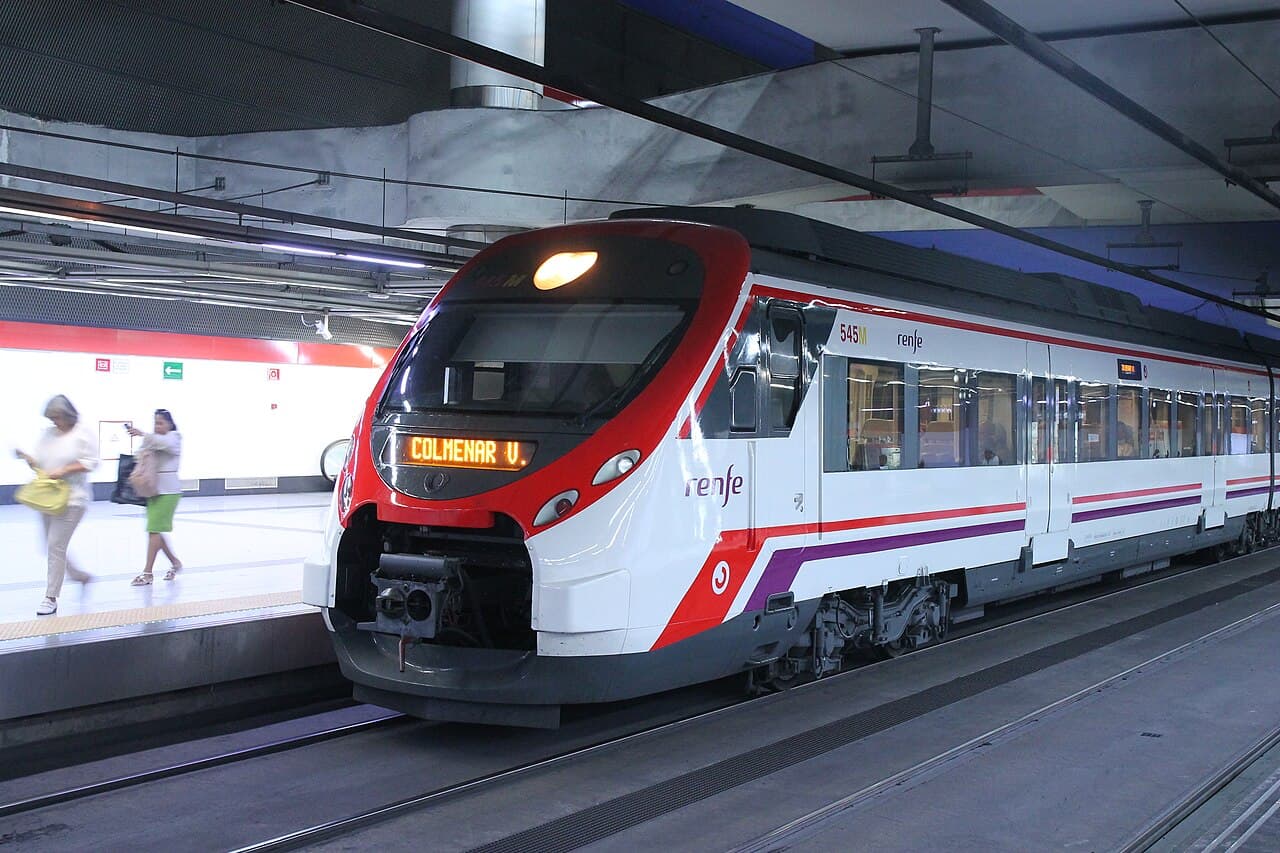
For buses, the closest approaches include Menendez Pelayo, O'Donnell, and Puerta de Alcalá routes. Cercanías also works if Recoletos or Atocha is convenient for you. For a first visit, Retiro metro is the classic entrance; Ibiza is often better if you want to leave toward bars and restaurants afterwards.
One mobility wrinkle: the official "Cómo llegar" page warns that some access routes and public transport services could be modified on June 7, 2026 because of the visit of Pope Leo XIV to Madrid. If you plan to go that Sunday, check current transport information before leaving. Madrid can turn one official visit into three detours and a philosophical argument with Google Maps.
For a broader city transport primer, see our public transport guide.
What To Buy And How To Browse
The Feria is strongest when you treat it as a discovery engine, not a shopping list with trees.
Start by walking one side of the Paseo de Coches without buying anything. Note casetas that look useful. Then cross over and come back. This prevents the classic Feria mistake: buying two heavy books in the first ten minutes and spending the next hour carrying your new opinions through a crowd.
The 10% discount is required by the fair rules and applies to book sales in the fair recinto to final buyers. Additional discounts are prohibited, so do not expect Black Friday behaviour. The value is less about bargain hunting and more about access: independent bookshops, specialist publishers, university presses, children's publishers, comics, poetry, politics, local Madrid titles, cookbooks, maps, illustrated books, and small presses that are easy to miss online.
If you are new to Madrid, look for books that help you decode the city: Madrid history, neighbourhood writing, architecture, Spanish politics, food, and local fiction. A practical expat bookshelf should have more than visa paperwork and one abandoned Spanish grammar book staring at you from the shelf.
Heat, Sun, And The Retiro Problem
This is an outdoor event in El Retiro, so weather is not a detail.
For the first days of the fair, heat is the real issue. The current forecast points to dry, very warm weather, with highs around 34-35°C for the opening weekend and very high UV in the days before it. In Madrid terms, this is the part of late May where everyone suddenly remembers that summer is not a metaphor.
Go early or after 18:00, carry water, wear a hat if you have any dignity left to protect, and do not treat a long author-signing queue as harmless waiting. A queue in Retiro can mean 45 minutes of sun exposure with no useful shade. The Paseo de Coches has shade in parts, but queues do not always form where shade would be convenient. Queues have no respect for urban comfort.
The 14:00-17:00 closure is useful here: let it force a break. Do not hover around the park waiting for the casetas to reopen. Leave for lunch, air conditioning, or a proper sit-down somewhere around Ibiza, Retiro, Menendez Pelayo, or the Prado/Thyssen side if you came from the west. Come back when the light is lower and everyone is less shiny.
Rain is the less likely problem in the immediate forecast, but keep the Retiro caveat. Heavy rain, wind, or park safety alerts can still affect an outdoor event. The official regulations say Retiro's adverse weather protocol can suspend outdoor events, close casetas and temporary structures, or, in a red alert, evacuate and close the park. Check the official website before leaving on unstable weather days.
A Good First Visit Plan
If you have never been, do this:
Go on a weekday evening. Enter from Retiro or Ibiza around 17:30 or 18:00, especially while the forecast is sitting in the mid-30s. Walk one side first, without buying. Stop at Booksellers or Desperate Literature if English books are part of the mission. Check one publisher or bookshop you already like. Buy no more than two books unless you brought a bag with actual structural integrity.
If you care about a signing, make that the centre of the visit and reduce everything else. If you do not care about signings, ignore the busiest queues and enjoy the fair as a long browsing walk.
Then leave before you become tired and resentful. Retiro is best when you exit with one good book, one mildly unnecessary book, and enough energy to sit somewhere afterwards.
The Feria del Libro is one of Madrid's great free events because it is not trying to be spectacular. It is just the city doing something it does well: putting culture in public, letting people wander through it, and trusting that a long row of books still has enough pull to compete with the rest of the weekend.
Most expats miss it or do it badly once. You now have no excuse.
Sources and weather forecasts checked on May 24, 2026. Check the official programme, signing page, transport updates, and latest forecast again before visiting, especially during the hot opening weekend and around June 7.
Main tradeoffs
- The Feria is one of Madrid's genuinely great free cultural events, but it is still a long outdoor corridor in late-spring heat. A romantic browse can become a slow human conveyor belt.
- Author signings are the draw, but queues can eat the entire visit. Choose one signing as the plan, not six as a fantasy.
- Heat is the main weather problem for the opening stretch: carry water, avoid the 14:00-17:00 dead zone, and treat long signing queues as full-sun exposure unless proven otherwise.
Sources
- Feria del Libro de Madrid 2026 official site / Feria del Libro de Madrid
- Firmas 2026 / Feria del Libro de Madrid
- Expositores 2026 / Feria del Libro de Madrid
- Cómo llegar / Feria del Libro de Madrid
- 85ª Feria del Libro de Madrid / Comunidad de Madrid
- Reglamento de la Feria del Libro de Madrid 2026 / Feria del Libro de Madrid
- Feria del Libro Madrid 2026 / Time Out Madrid
- Predicción 7 días: Madrid / AEMET
- El tiempo en Madrid: 14 días / Eltiempo.es
Spotted an outdated detail? Send the desk a correction.