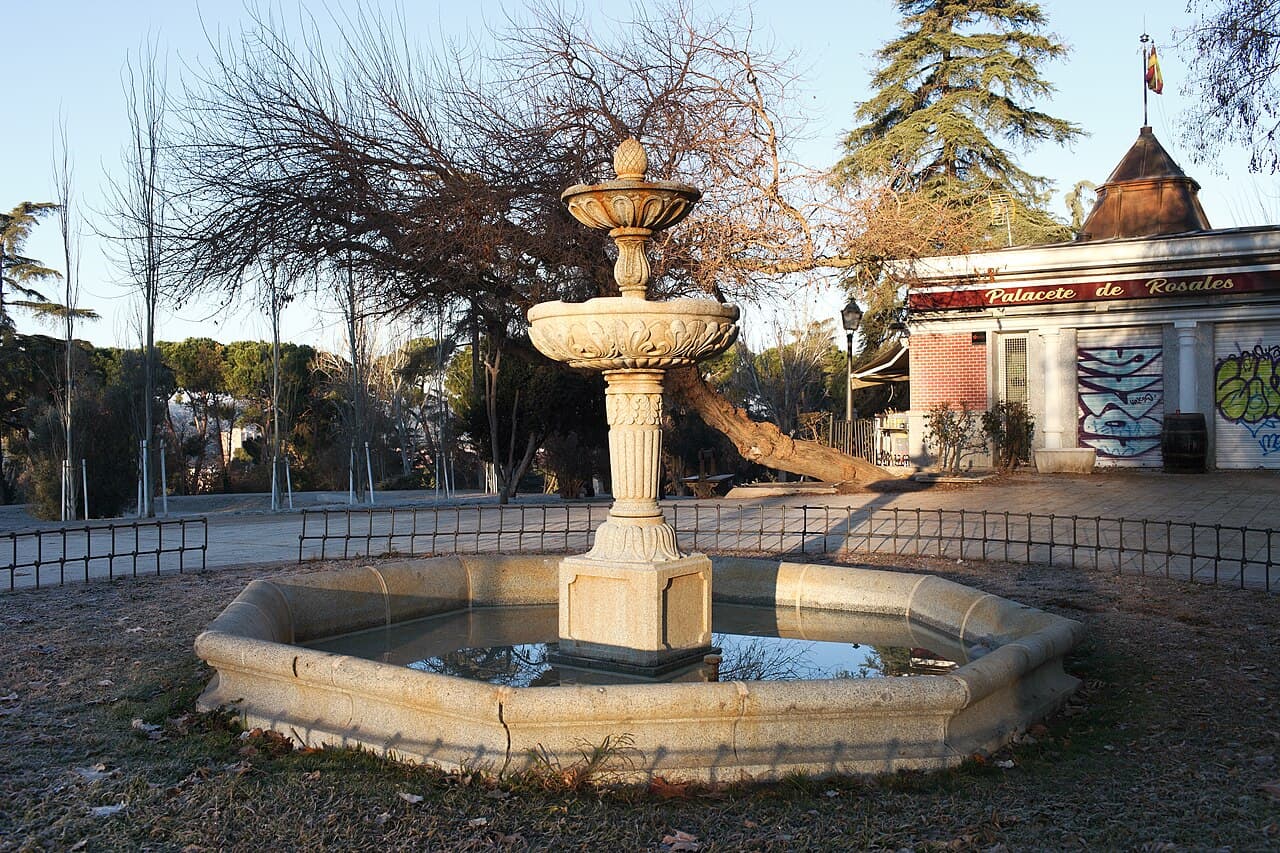
Quick snapshot
One of the better practical choices if your life points west, toward universities, parks, or northwest transport.
- Rent
- €€€
- Typical rent
- €1,400–€2,600+
- Noise
- Medium
- Safety (editorial)
- High
- Green space
- High
Rent & Cost of Living
Typical asking rent range: €1,400–€2,600+, varies by size, condition, and contract type. This edition's indicative per-square-metre estimate is around €22/m² in Moncloa-Aravaca, higher around Argüelles.
Rent ranges are dated editorial planning estimates, not current market quotations. Compare live listings and the exact flat. Atmosphere and safety ratings are editorial judgments, not statistical crime rankings.
A bit of history
Argüelles developed in the second half of the 19th century as part of Madrid's westward expansion, initially as a middle-class residential extension of the old city along the Calle Princesa axis. Moncloa, further west toward the university campus, grew up in the 20th century around the Complutense University and the various institutional and ministerial buildings that clustered on the western edge of the city. The Spanish Civil War left a deep mark on this part of Madrid — the front line ran through the Ciudad Universitaria campus from 1936 to 1939, and some of the most intense urban fighting of the war happened in and around the university buildings. The Palacio de la Moncloa, now the official residence of the Spanish Prime Minister, takes its name from the area and sits on the edge of the campus. The intercambiador at Moncloa — the large bus and metro interchange that defines the area's transport character — was built in its current form in 1995 and became the main gateway for buses connecting Madrid to the northwest of the country and to the wider metropolitan area.
The Vibe
Practical, student-adjacent, residential, connected, park-oriented. Excellent west-central access via Moncloa, Argüelles, Ventura Rodriguez, Intercambiador de Moncloa, university bus routes, and easy links to Princesa, Gran Via, and northwest Madrid.
Moncloa and Argüelles are easy to underrate because they do not fit the romantic version of Madrid. They are not the old center, not a nightlife district, not luxury Salamanca, and not a postcard barrio. Their strength is more practical: transport, parks, university access, services, and a west-central location that makes ordinary weeks easier.
For students and university-linked residents, the logic is obvious. Ciudad Universitaria, Complutense, technical campuses, bus routes, libraries, and student services are close. For families and professionals, the appeal is different: Parque del Oeste, Casa de Campo edges, useful shopping on Princesa, strong metro access, and a rhythm that can be calmer than the dense central nightlife zones.
Who It’s For
- Students
- University-linked residents
- Families who want parks nearby
- Professionals with west or northwest routines
Who Should Avoid It
- You want old-Madrid atmosphere
- You want nightlife outside your door
- You want polished luxury
- You dislike traffic-heavy avenues
Best Sub-Areas
Highlights
- Intercambiador de Moncloa for buses, metro, and northwest Madrid access
- Parque del Oeste, Temple of Debod, and Casa de Campo edges
- Strong student infrastructure and university routes
- Princesa shopping and everyday services
- Good compromise between central access and calmer routines
Pros and Cons
Pros
- Excellent transport, especially for west and northwest Madrid
- Better park access than most central neighborhoods
- Practical for students, families, and university-linked residents
- Strong daily services without full tourist-center pressure
- Often easier for repeat routines than Malasana, Sol, or Chueca
Cons
- Some streets are dominated by traffic, buses, or student movement
- Less atmospheric than La Latina, Las Letras, or Malasana
- Good Argüelles flats can be expensive for the space
- Nightlife and restaurants are less exciting than more central barrios
- The area can feel transitional near the interchange
Compared With Other Neighborhoods
- More practical and park-friendly than Malasana
- Less polished than Chamberi, but often better for university and west-side routines
- More residential than Sol or Chueca, with less instant nightlife
- Better connected to northwest Madrid than Retiro or Salamanca
Bottom Line
The area changes quickly by street. Argüelles around Princesa is urban and convenient, with shops, metro stations, and services at hand. Moncloa around the interchange is more transport-led and student-heavy. Park-facing or park-adjacent streets can feel much calmer and more residential. Streets closer to major roads can be noisy, polluted, and less pleasant on foot.
Rental value depends on what you compare it to. Against Sol, Chueca, or Las Letras, Moncloa / Argüelles can feel more livable and sometimes more rational. Against further-out residential districts, it can feel expensive. You are paying for west-central access, park proximity, and transport, not for charm.
Choose Moncloa / Argüelles if you want Madrid to be functional: metro, buses, parks, groceries, universities, and reasonable access to the center. Skip it if your priority is old-Madrid atmosphere, restaurant density, nightlife, or a polished premium feel.
Location
Rent figures in this guide are editorial planning estimates from its 2026-05-02 edition, not a current market quotation or a guarantee for a particular flat. Compare live listings. Descriptions of atmosphere and safety are editorial judgments, not a statistical crime ranking; inspect the exact street and building.
Spotted an outdated detail? Send the desk a correction.