Quick snapshot
The strongest argument for living south: Madrid Río, Matadero, real prices, and genuinely calm streets.
- Rent
- €€
- Typical rent
- €1,000–€1,800+
- Noise
- Low
- Safety (editorial)
- High
- Green space
- High
Rent & Cost of Living
Typical asking rent range: €1,000–€1,800+, varies by size, condition, and contract type. This edition's indicative per-square-metre estimate is around €15–€18/m².
Rent ranges are dated editorial planning estimates, not current market quotations. Compare live listings and the exact flat. Atmosphere and safety ratings are editorial judgments, not statistical crime rankings.
A bit of history
Legazpi grew around the Real Matadero y Mercado de Ganados, the municipal slaughterhouse and livestock market built between 1908 and 1925. For most of the 20th century it was industrial and working-class. The Madrid Río project and the conversion of Matadero into a cultural center transformed the area into one of Madrid's clearest examples of industrial-to-residential reinvention.
The Vibe
Calm, improving, cultural, green, residential. Metro lines 3 and 6 at Legazpi station. Line 3 serves Delicias and Palos de la Frontera; Atocha requires a walk, bus or a different rail route, plus bus connections to the south and center.
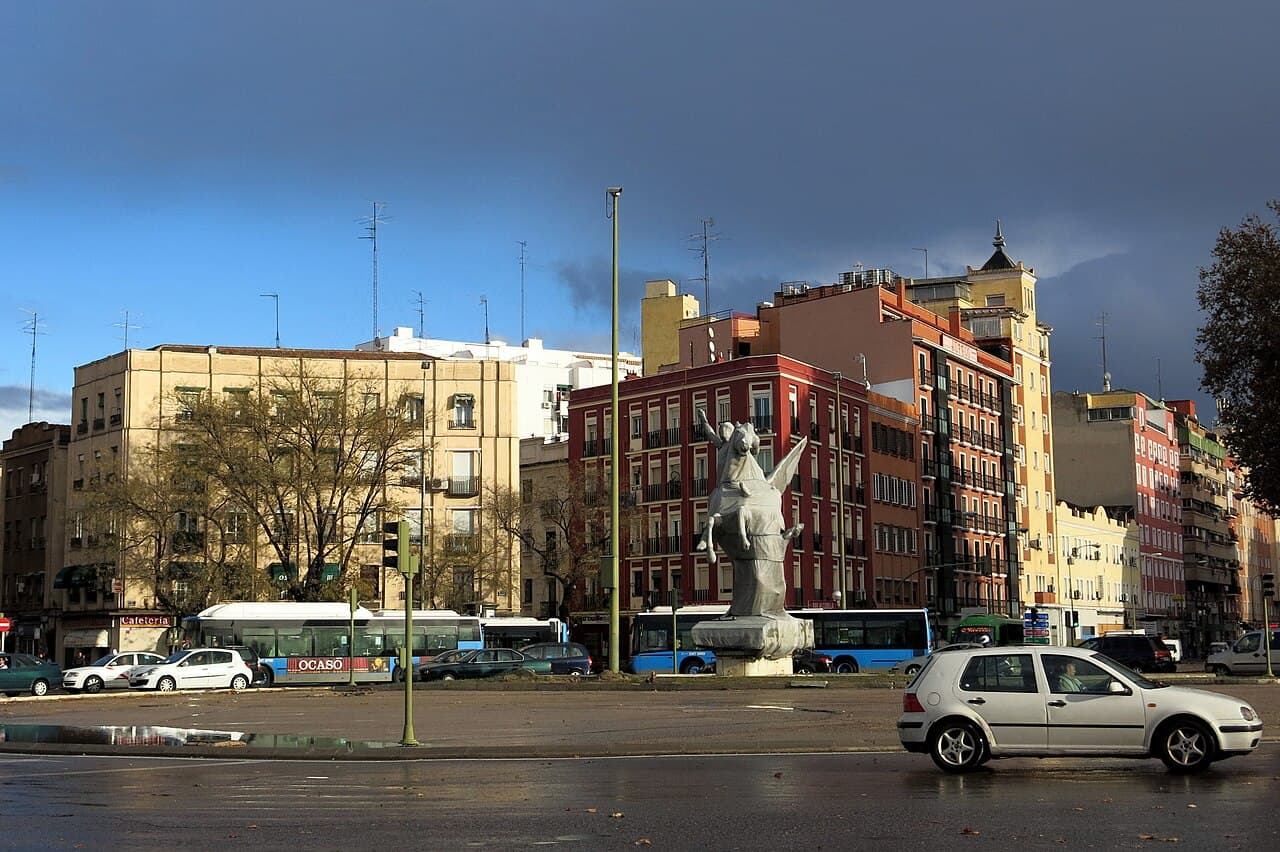
Legazpi's transformation is one of Madrid's most interesting urban stories. What was once an industrial edge defined by slaughterhouses, railway infrastructure, and the M-30 is now a residential area with Madrid Río at its door, Matadero Madrid as a cultural anchor, and rents that remain lower than many comparable neighborhoods.
Madrid Río is the key. The city buried the M-30 motorway and created a continuous park along the Manzanares. Legazpi sits at one of the most useful access points. Running, cycling, walking, playgrounds, and open-air routines are much easier here than in denser central barrios. That kind of outdoor life costs much more in Retiro.
Who It’s For
- Budget-conscious professionals
- Couples wanting outdoor space
- Remote workers
- Anyone who discovered Arganzuela too late
Who Should Avoid It
- You need to be within walking distance of nightlife
- You work north of center and commuting time matters
- You want the most international expat community
Best Sub-Areas
Highlights
- Madrid Río — 10km of riverside parkland starts at Legazpi's front door
- Matadero Madrid — one of Madrid's best contemporary art and culture venues
- Plaza de Legazpi as the neighborhood's main square
- Direct metro to Atocha in two stops
- Newer building stock than many central neighborhoods
Pros and Cons
Pros
- Immediate Madrid Río park access
- Matadero cultural center nearby
- Genuinely quiet streets with little tourist or nightlife pressure
- Newer buildings in parts, often with better elevators and layouts
- Prices remain below comparable green-space neighborhoods
- Lines 3 and 6 give useful Atocha and circular-line access
Cons
- Further from Madrid's social center
- Local restaurant and cafe scene is improving but still limited
- Can feel isolated in the evenings if you are used to walking everywhere
- Some streets remain transitional, so exact address checks matter
Compared With Other Neighborhoods
- Cheaper than Arganzuela overall, which has been more widely discovered
- Better green space than almost anywhere else at this price
- Further from the social center than Lavapiés, but safer-feeling and cheaper
- Similar price point to Delicias, with stronger cultural infrastructure and river access
Bottom Line
Matadero Madrid changes the cultural equation. The converted slaughterhouse runs exhibitions, cinema, performances, markets, and public programming year-round. It is not just a tourist attraction; it is a working cultural venue used by residents. Having it nearby gives Legazpi more texture than many quiet value neighborhoods.
The building stock is mixed, but some parts are newer or better adapted to contemporary life than old central barrios. Elevators, insulation, layouts, and heating are often less awkward than in older Centro buildings, though you still need to inspect each address.
The tradeoff is distance from the social center. Malasaña, Chueca, Chamberí, and La Latina usually require the metro. If your work or social life is north of the center, test the commute honestly. If you work from home, use Atocha, or value outdoor space more than nightlife, Legazpi is one of the strongest south-of-center choices.
Location
Rent figures in this guide are editorial planning estimates from its 2026-05-02 edition, not a current market quotation or a guarantee for a particular flat. Compare live listings. Descriptions of atmosphere and safety are editorial judgments, not a statistical crime ranking; inspect the exact street and building.
Spotted an outdated detail? Send the desk a correction.