On this page
Key takeaways
- Madrid's barrio festivals are neighbourhood patron-saint celebrations: part free concert, part procession, part street party, part local identity lesson.
- Chamberí's Fiestas del Carmen run July 14-19, with Plaza de Chamberí as the main stage, the pregón on Friday July 17, and concerts by Bertín Osborne, Siempre Así, Tam Tam Go, Revlover, and Los Inspectores.
- Early to mid-August brings the classic Centro sequence: San Cayetano around Cascorro and Embajadores, San Lorenzo in Lavapiés, and La Paloma around La Latina and Las Vistillas.
- These are not polished tourist festivals. Go for the local rhythm, not for a frictionless production.
The Local Summer Madrid Hides In Plain Sight
Madrid's summer calendar has two faces. One is easy to see: Mad Cool, Noches del Botanico, Veranos de la Villa, stadium concerts, outdoor cinema. The other is more local and easier to misunderstand: fiestas de barrio, the barrio festivals that appear in plazas, side streets, church calendars, and municipal PDFs just when everyone thinks Madrid has become too hot to function.
A barrio is a neighbourhood. A verbena is a traditional street party, usually with music, food stalls, families early, older neighbours who know the songs, teenagers later, and at least one person confidently dancing in a way you cannot learn from YouTube. A fiesta patronal is a patron-saint festival: technically religious in origin, practically a neighbourhood claiming the street for a few nights.
For expats, these fiestas are useful because they explain something apartment listings never do: Madrid is not just a city of districts. It is a city of small local loyalties.
Why They Matter
The point of a barrio fiesta is not that every act is famous or every programme is slick. The point is that the neighbourhood briefly becomes more itself.
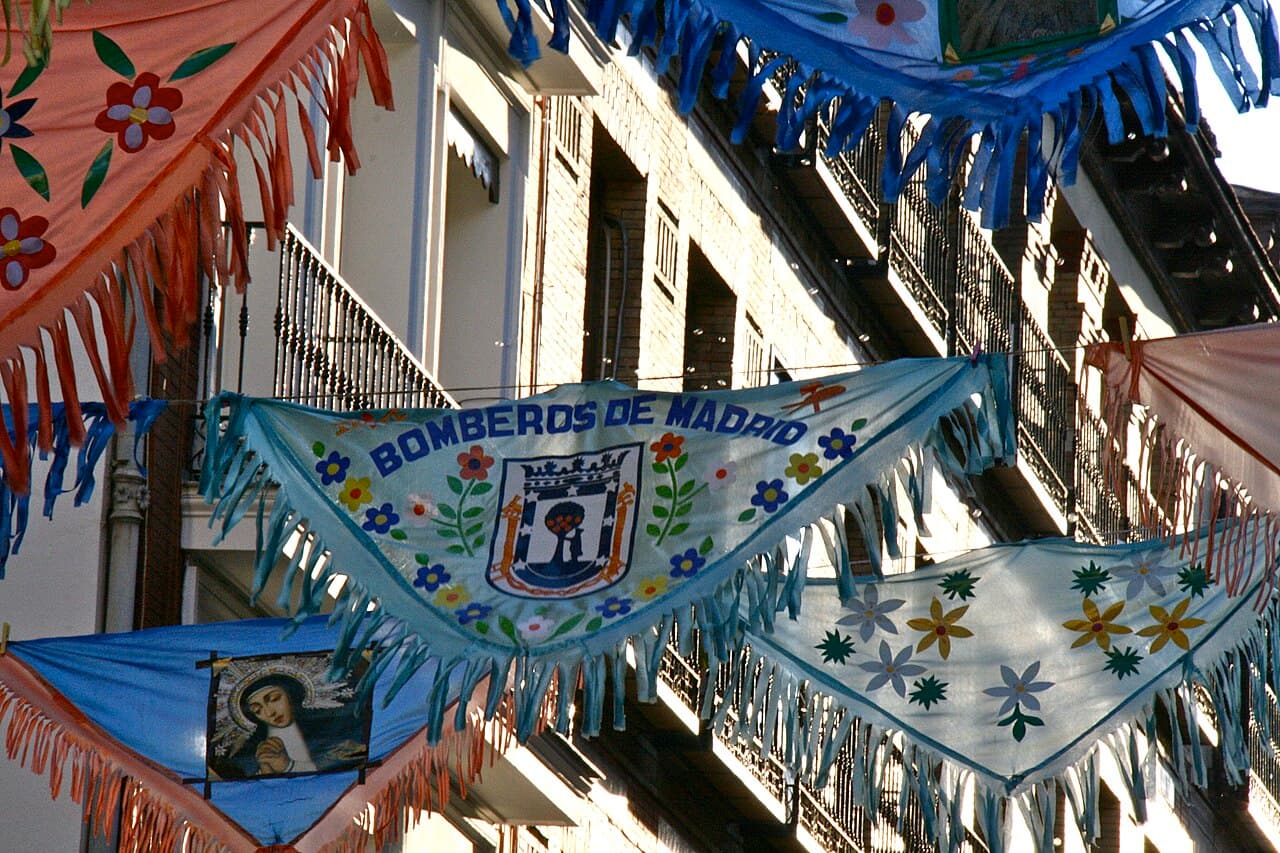
In Chamberí, that means a central, polished district remembering it has a patron-saint tradition and not only wine bars. In Vallecas, the Fiestas del Carmen can feel more assertive, political, and proudly local. In Lavapiés and La Latina, August's verbenas are part of Madrid's castizo identity: chotis, decorated balconies, limonada, processions, street stages, and a version of old Madrid that somehow survives between kebab shops, tourist apartments, and late-night terraces.
This is also why you should not treat these fiestas like a theme park. They are open to outsiders, but they are not about outsiders. Go, enjoy, buy a drink, listen, move when people need to pass, and remember that the people living above the stage did not book a hotel with nightlife.
Mid-July: Fiestas Del Carmen
The mid-July anchor is Nuestra Señora del Carmen, usually celebrated around July 16. In Madrid, the Carmen tradition is especially associated with Chamberí and Puente de Vallecas, and historically also appears in other districts.
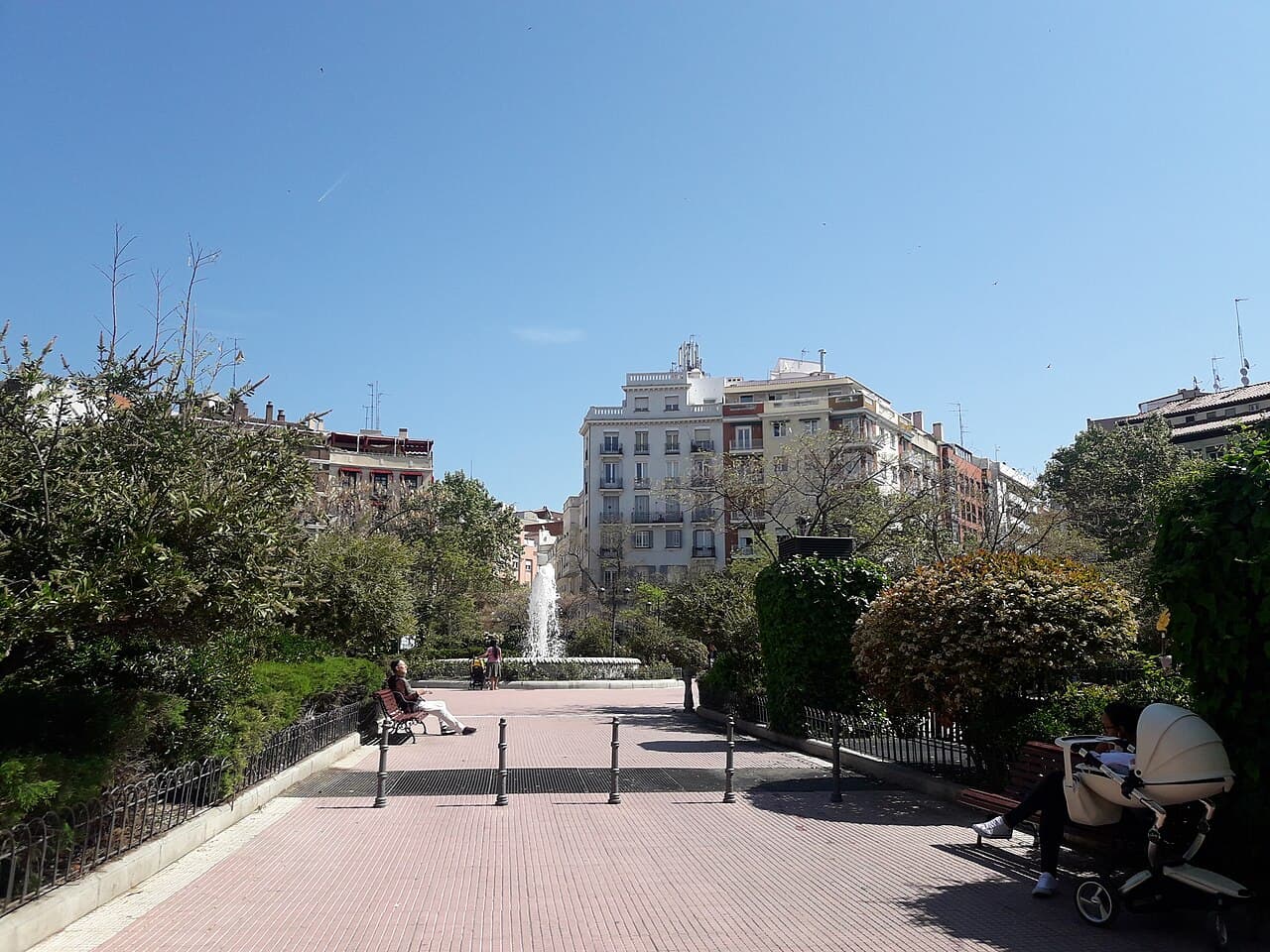
Chamberí's Fiestas del Carmen run Tuesday July 14 to Sunday July 19, with Plaza de Chamberí as the main stage. The opening act is unusually formal: the national flag is raised on Tuesday at 9:30 by the Spanish Navy. On Thursday July 16, the traditional procession for Nuestra Señora del Carmen leaves from the parish of Santa Teresa and Santa Isabel, at Glorieta del Pintor Sorolla 2.
The big popular nights come from Friday onward. Samantha Vallejo-Nágera gives the pregón - the opening speech - on Friday July 17 at 20:00, followed by Bertín Osborne at 21:00, Siempre Así at 23:00, and DJ Mike Fajardo closing it out at 00:45.
Saturday mixes district-band winners with bigger nostalgia acts: The Decrolers at 13:00, Grupo Grupo at 20:30, Yacaré at 21:15, Tam Tam Go at 22:45, and Barce at 00:30. Sunday is calmer, closing with Revlover, the official Revólver tribute, at 20:30, and Los Inspectores at 22:30.
There is a family layer too: Centro Cultural Galileo hosts the children's musical La ruta del ritmo on Friday, the family concert Dando la nota and the children's show La viajera Brisa on Saturday, while Sunday brings magic, science, foam parties, and a mini-disco on Calle de Fuencarral. Cultural institutions in the district also join in, including Museo Estación de Chamberí, Fundación Rafael del Pino, Instituto Geográfico Nacional, Fundación María Cristina Masaveu Peterson, Teatros del Canal, Pequeño Cine Estudio, Casa de México, and others. The important practical detail: activities are free, but many cultural visits and family events require advance registration or ticket collection through the venue running them.
The useful thing is not only the event; it is the contrast. Chamberí usually sells itself as calm, residential, central, and tasteful. During fiestas, it becomes more public and less polished.
Puente de Vallecas is the other Carmen heavyweight. Vallecas does local identity loudly and with less concern for central-Madrid manners, which is exactly the point. If you live east or south-east, this may be the better Carmen experience than Chamberí. Expect more neighbourhood energy, more politics around the edges, and a stronger sense that the fiesta belongs to residents first.
Early August: San Cayetano
The classic August sequence begins with San Cayetano, around August 7, in the Cascorro / Embajadores / El Rastro area. Use that date as the saint's-day marker until the Centro district publishes the full 2026 programme.
This is the first of the traditional Centro verbenas. The geography matters: Plaza de Cascorro, Ribera de Curtidores, Calle del Oso, Embajadores, and the streets around the San Cayetano church. It feels like Madrid turning the Rastro area into a night-time neighbourhood fair: decorated streets, music, religious acts, children early, grown-ups later, and a lot of people who came for "just one drink" learning that August has other ideas.
For newcomers, San Cayetano is useful because it is central and accessible without being quite as huge as La Paloma. Go early evening if you want to understand it. Go late if you mostly want a crowd.
August 10: San Lorenzo In Lavapiés
San Lorenzo belongs to Lavapiés, around August 10. Again, treat that as the planning marker until the 2026 district programme gives the full street-by-street schedule.
Lavapiés is already one of Madrid's most layered neighbourhoods, and San Lorenzo adds another layer: old castizo Madrid, immigrant Madrid, activist Madrid, student Madrid, all trying to share streets that were not designed for graceful crowd flow. The area around Calle Argumosa, Plaza de Lavapiés, and nearby streets can become very busy.
The reward is atmosphere. The trade-off is friction. Lavapiés fiestas are better when you are not in a hurry and not trying to move a group of eight people through a narrow street at midnight. If you want dinner, book or eat early. If you want the fiesta, stand, wander, listen, and let the night be a little inefficient.
Mid-August: La Paloma
La Paloma, around August 15, is the big one. The exact 2026 programme normally matters more than the saint's day itself, because the concerts, procession timing, and street closures spread across several days.
The festival is centred on La Latina, Las Vistillas, Calle de la Paloma, Plaza de la Paja, Puerta de Moros, and the wider old-town slope toward Toledo. It is religious, popular, theatrical, and deeply Madrid. The Virgen de la Paloma is often called the city's popular patroness, and the festival mixes procession, decorated balconies, traditional dress, music, and crowds that can make the area feel like the whole city has decided to go through one doorway.
If you only attend one traditional barrio fiesta in Madrid, make it La Paloma. But do it properly: arrive before the thickest crowd, expect slow movement, and avoid treating La Latina dinner reservations as if the neighbourhood will behave normally.
How To Attend Without Being Weird
You do not need an invitation. These are public fiestas. You do need a little situational awareness.
If there is a procession, give it space. It may look like spectacle to you, but for many people it is devotional, family-linked, or simply part of the neighbourhood's year. If there is a small stage, do not block older residents who have clearly been waiting longer than you. If a bar is slammed, order simply. If you are standing under someone's balcony at 1 a.m., remember that charm has a volume limit.
Bring cash as a backup, even if most places take cards. Wear shoes for standing, not posing. Use public transport and plan around the nearest metro before the street gets thick: Iglesia or Quevedo for Chamberí, La Latina or Puerta de Toledo for San Cayetano, Lavapiés for San Lorenzo, and La Latina for La Paloma and Las Vistillas. Check last metro times and night-bus options before the second drink. Madrid summer rewards basic competence.
Which Fiesta Should You Choose?
If you live near Chamberí, or you are curious how a polished residential district behaves when it loosens its collar, the cleanest nights are Friday for the pregón, Bertín Osborne and Siempre Así; Saturday for Tam Tam Go; and Sunday for the closing tribute-and-covers run. If you want stronger neighbourhood identity and do not need the event to feel designed for outsiders, Vallecas is the better Carmen.
San Cayetano is the accessible way into August: central, busy, but not yet at La Paloma's scale. San Lorenzo is for people whose Madrid is Lavapiés, and who can handle crowds with edges. If you only go to one, make it La Paloma: centred on La Latina and Las Vistillas, the biggest, oldest, most unmistakably Madrid of the four.
If none of that appeals and what you actually want is a curated programme with clear tickets and a published start time, that is what Veranos de la Villa is for. There is no shame in wanting a seat.
The Bottom Line
Madrid's barrio festivals are not always smooth. Programmes appear late. Streets get crowded. Stages are small. Sound checks happen exactly when someone nearby is trying to put a child to bed. But they are one of the best ways to understand the city beneath the obvious weekend calendar.
Go to Chamberí for Carmen if you want a central barrio fiesta with a proper programme. Keep Vallecas on your July radar. Save early August for San Cayetano and San Lorenzo. Leave room for La Paloma. And if all of that sounds like too much, choose one night and do it well. Madrid will still have another fiesta next year.
Main tradeoffs
- The best parts are often free and local, which also means programmes depend on small stages, neighbourhood associations, and street capacity.
- A barrio fiesta can be charming at 21:30 and exhausting at 00:30 if your flat is on the route. Residents should treat noise and street closures as part of the practical story.
- Some events are religious, some are secular, and most are both at once. The trick is to read the room.
Sources
- Programa de fiestas de Chamberí 2026 / Ayuntamiento de Madrid
- Fiestas del Carmen in Madrid / Wikipedia
- Fiestas de San Cayetano / Wikipedia
- Fiestas de San Lorenzo / Wikipedia
- Fiestas de La Paloma / Wikipedia
- Fiestas en Madrid 2026: fechas por distritos y barrios / LOS40
- Veranos de la Villa Festival 2026 / esmadrid
Spotted an outdated detail? Send the desk a correction.